

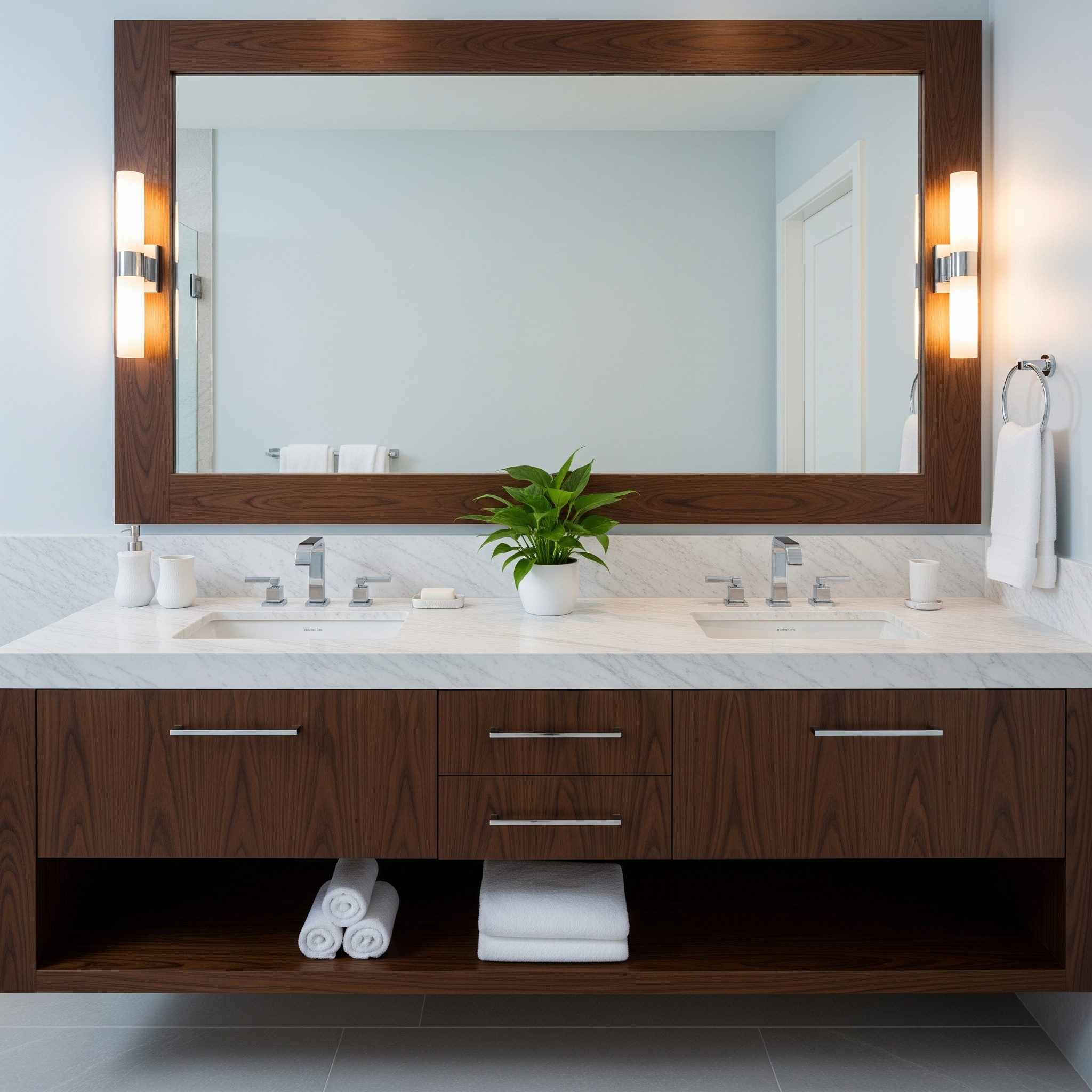
Understand Your Space and Measure Thoughtfully
The starting point in choosing the perfect bathroom vanity is accurate measurement. Measure the width, depth, and height of the available space, including wall to wall width, door swings, and proximity to toilets or showers. Always allow for clearance on either side, typically a few inches, to prevent drawers or doors from rubbing on walls and to enable easy cleaning and maintenance.
Match Vanity Size to Bathroom Layout and Functionality
Consider whether your layout suits a single, double, or even corner mounted vanity. Standard widths for single sink models range from approximately 24 to 48 inches, while double vanities tend to start around 60 inches and can extend to 72 inches. Depth generally varies between 18 and 24 inches, and standard heights fall between 32 and 36 inches, though shorter or taller options can accommodate kids or taller users accordingly.
Prioritize Storage That Fits Your Routine
Think about the items you’ll store daily toiletries, towels, cleaning supplies—and choose between drawers, cabinets, or open shelving appropriately. Drawers with soft close mechanisms offer organized access to smaller items, while cabinets with adjustable shelving are great for bulkier storage. Open shelving can add a modern, airy look, particularly in guest bathrooms.
Select the Right Sink and Countertop Configuration
Your sink style affects both functionality and aesthetic. Integrated or undermount sinks deliver a streamlined, easy to clean look, while vessel sinks offer a bold, sculptural statement that may suit powder rooms more than primary bathrooms. Countertop materials vary widely quartz is durable and low maintenance, marble is elegant but higher maintenance, and ceramic or porcelain offers budget friendly simplicity.
Choose Materials, Styles and Future Proof Durability
Bathroom vanities function as durable furniture in a humid environment. Opt for materials like solid wood, engineered wood, or moisture resistant laminates that withstand wear and humidity. Style should mesh with your bathroom’s overall design floating vanities lend modern minimalism and make small spaces feel larger, while furniture style or traditional vanities offer a classic, grounded feel.
Plan for Accessory Compatibility and Longevity
Don’t overlook complementary components faucets, mirrors, and lighting must align with your vanity’s mounting and style. Ensuring faucet compatibility, such as number of holes and spout reach, and considering coordinated fixture sets can simplify design cohesion. Lastly, selecting surfaces that resist water and are easy to wipe down will save time and maintain freshness for years.