

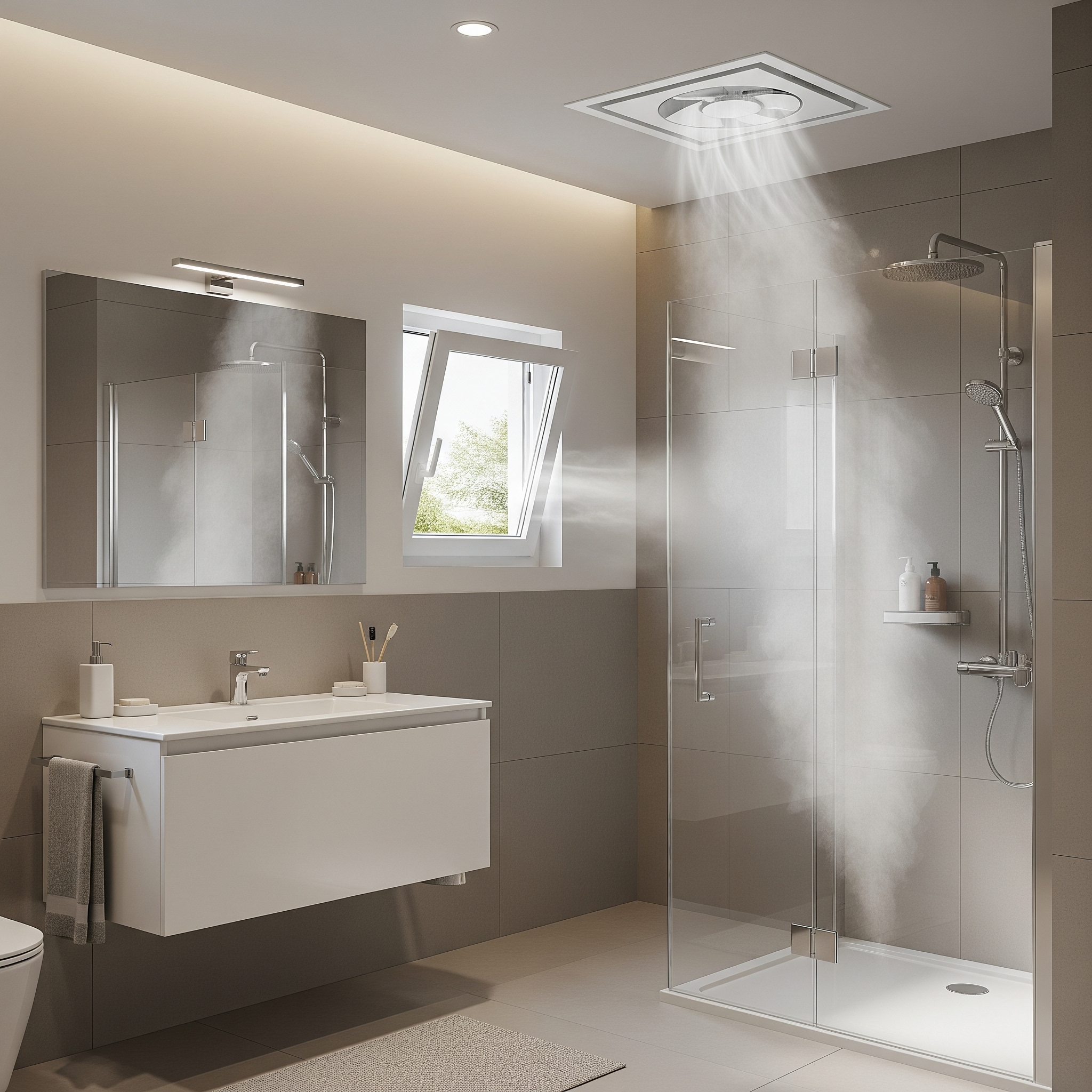
How to Improve Bathroom Ventilation
All bathrooms are prone to moisture buildup, which can lead to mold, mildew, peeling paint, and unpleasant odors. Ensuring proper ventilation is vital for protecting surfaces and preventing health issues caused by excess humidity.
Start by choosing the right exhaust fan. Fans are rated in cubic feet per minute or CFM indicating how much air they move. The general rule of thumb is to have at least one CFM per square foot of bathroom area. Opting for energy efficient models with features like humidity sensors or built in timers enhances usability and reduces energy use.
Proper installation is just as important as choosing the fan. The fan should be located near high moisture areas, such as over the shower or tub. Use rigid ductwork, minimize bends and length, insulate when needed, and ensure it vents directly outdoors rather than into attics or crawl spaces.
Enhance natural ventilation when possible. Opening a window or leaving the bathroom door ajar after use creates airflow that works together with the exhaust fan to clear humidity more effectively. In bathrooms where mechanical or natural solutions are limited, a portable dehumidifier or standalone fan can help reduce moisture in the air.
Do not overlook maintenance. Clean your fan regularly to remove dust buildup which can block airflow and reduce efficiency. Also, remember to run the fan long enough after showers, usually 20 to 30 minutes or more, to ensure full moisture removal.
If your bathroom lacks effective fan ventilation or is particularly large or complex, it may be wise to consult a professional. They can ensure proper fan sizing, placement, and duct installation and offer advanced solutions like inline fans or heat recovery ventilators that combine ventilation with energy efficiency.